 EN
EN
 English
  русский
  Español
  Deutsch
  عربى
عربى 
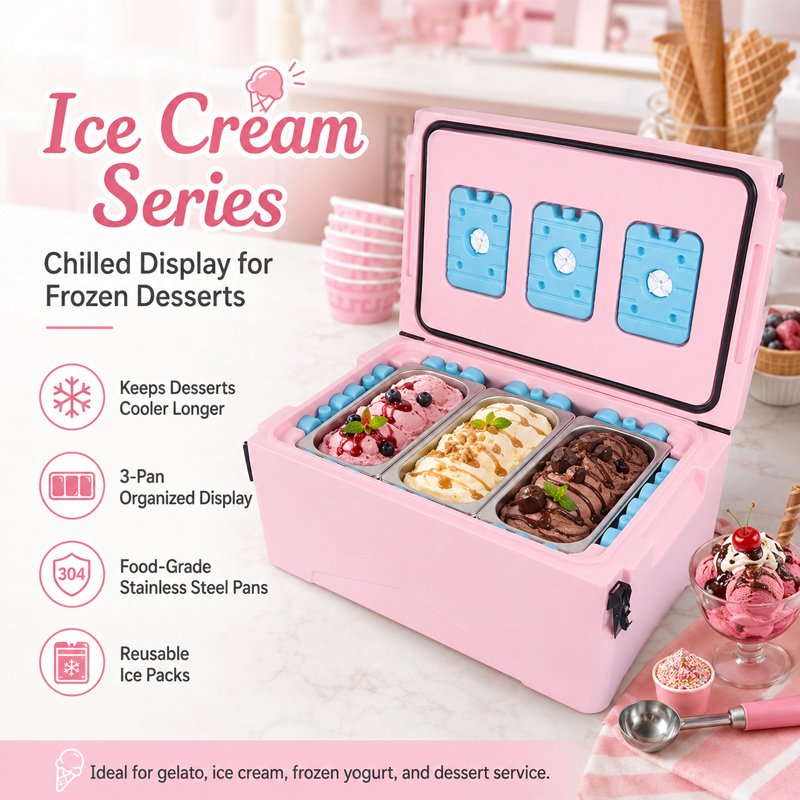
This mobile insulated ice cream display cooler is fitted with three stainless-steel pans, each approximately 6.6L / 7QT, in an overall body of about 69.5 × 44.5 × 32 cm. The separate pans allow differ...
See Details
How Long Does a Cooler Box Last? Ice Retention and Real Lifespan Guide
2026-09-17
Friday evening, about nine o'clock. You have just packed the cooler box for tomorrow's trip: drinks on the bottom, marinated chicken in a sealed container, a bag of party ice poured over the top. By Sunday afternoon, you lift the lid and find lukewarm water. Nothing has spoiled, but nothing is properly cold either, and you quietly wonder whether the cooler box is failing or whether this is simply how long a cooler box lasts.
The honest answer is that a cooler box lasts anywhere from under twelve hours to more than a week when it comes to ice retention, and from two years to more than fifteen when it comes to the physical box itself. The range is wide because cooler boxes are not one product category. A thin Styrofoam picnic box, a soft-sided cooler bag, an injection-molded hard cooler, and a rotomolded expedition box share the same basic job but use completely different materials, wall thicknesses, and insulation strategies. Once you understand what separates them, the numbers stop being mysterious.
What "How Long Does a Cooler Box Last" Actually Means
When people search for this question, they usually mean one of two things: how long the box can keep ice and food cold during a single outing, or how many years the physical box will survive before cracks, warped lids, or broken latches force a replacement. Both interpretations are valid, and both deserve a direct answer.
For ice retention, the realistic range is roughly 12 hours to 7 days. A high-quality rotomolded cooler with block ice, a full load, and minimal lid opening can hold ice for a week or longer. A disposable Styrofoam box under the same conditions will rarely make it past 24 hours. For physical service life, the range is equally broad: an injection-molded cooler typically gives 3 to 8 years of regular use, while a well-built rotomolded box can last 10 to 20 years, often outliving the vehicle it travels in.
Understanding the difference between these two kinds of "lifespan" is the first step toward making a sensible purchase. Otherwise, buyers end up disappointed on both ends: they expect a cheap box to perform like an expedition cooler, or they replace a durable but poorly packed rotomolded cooler because they never learned how to use it properly.
The Short Answer: Ice Retention by Cooler Type
Before examining the variables that move the numbers, it helps to see the full range in one place. The figures below assume block ice or large cube ice, a box filled to at least 75 percent capacity, an ambient temperature around 25 to 30 degrees Celsius, and no more than two or three brief lid openings per day. Real-world results will vary, but these are the benchmarks that experienced users and manufacturers work with.
| Cooler box type | Typical ice retention | Typical physical service life |
|---|---|---|
| Disposable Styrofoam box | 12 to 24 hours | Hours to a few days |
| Soft-sided cooler bag | 12 to 36 hours | 1 to 3 years |
| Injection-molded hard cooler | 1 to 3 days | 3 to 8 years |
| Rotomolded expedition cooler | 3 to 7 or more days | 10 to 20 years |
| Industrial insulated fish tub | 3 to 7 days, depending on size | 5 to 15 years in regular commercial use |
Several patterns stand out. The first is that construction method strongly predicts performance: rotomolded coolers hold ice for far longer than injection-molded units of similar size because their walls are thicker and their insulation is denser. The second is that capacity also matters; a larger box holds more ice, and more ice means a longer melt time. The third is that physical durability roughly tracks price. You are not paying extra for a brand name alone; you are paying for thicker polyethylene, better gaskets, stronger hinges, and a manufacturing process that produces a genuinely different product.
Keep in mind that these are general expectations rather than guarantees. A premium small cooler can outperform a bargain large cooler, and a poorly maintained rotomolded box will lose to a carefully packed injection-molded one. The type of box sets the ceiling; your habits determine how close you get to it.
Ice Retention Versus Physical Lifespan: Two Timelines
Performance life: how long the cold lasts
Ice retention is the number that matters for food safety and convenience. It is measured from the moment ice is placed inside to the moment the last piece melts or the internal temperature climbs above about 4 degrees Celsius, which is the safe upper limit for most perishable foods. A cooler box does not need to keep ice completely solid to be useful; it needs to keep contents below the danger zone where bacteria multiply rapidly. Still, most people evaluate a cooler by looking at whether ice cubes remain at the bottom of the box.
Physical life: how long the box survives
The physical timeline is measured in years and depends on material fatigue, ultraviolet exposure, impact damage, and the wear of moving parts. Polypropylene injection-molded coolers are stiff and lightweight, but they can crack when dropped on hard ground in cold weather. Rotomolded coolers made from linear low-density polyethylene are more impact-resistant and can flex under load without cracking, which is why they survive decades of abuse in pickup trucks and boat decks. Hinges, latches, gaskets, and drain plugs fail long before the walls do, so replaceability matters as much as the shell itself.
Understanding both timelines prevents costly mistakes. A buyer who only cares about ice retention might spend a small fortune on a rotomolded cooler that gets used twice a year for day trips, when a much cheaper injection-molded box would have served just as well. A commercial buyer who only cares about price might purchase Styrofoam bins for seafood transport, then discover they cannot withstand stacking, forklift handling, or repeated sanitation cycles. The right question is not only how long a cooler box lasts in general, but how long it lasts for the specific job you give it.
The Variables That Decide Ice Retention
Ice retention is not a fixed property of a cooler box; it is the result of an equation with several inputs. Change any one of them and the final number shifts by hours or even days. The following factors explain why two identical cooler boxes can produce very different results in the hands of different users.
Ice type and form
The form of the ice is one of the most powerful variables. Large block ice has less surface area per unit of volume than cubes, so it melts more slowly. A 5-kilogram block will outlast the same weight of small party cubes by a significant margin, sometimes by 50 percent or more. This is why expedition campers and commercial seafood operations insist on block ice or large frozen jugs of water. Dry ice takes this further, but it requires care: dry ice sublimates at minus 78.5 degrees Celsius, lasts longer than water ice in most insulated boxes, and must never be used in a fully sealed cooler because carbon dioxide buildup can create dangerous pressure. For most camping and fishing trips, large cubes or block ice are the practical choice, with dry ice reserved for long transport runs where food safety margins are critical.
Insulation and wall construction
The walls of a cooler box are the main barrier between cold contents and warm outside air. Styrofoam boxes rely on expanded polystyrene beads, which are decent insulators but extremely fragile. Soft coolers use a thin layer of flexible foam wrapped in fabric, which offers modest insulation and almost no structural protection. Injection-molded hard coolers have a rigid polypropylene shell and either hollow walls or a thin layer of polyurethane foam; the better ones are filled under pressure to eliminate air gaps. Rotomolded coolers take a different path: the liner and shell are molded as one piece, after which high-density polyurethane foam is injected into the cavity between them. The result is a thicker wall, typically 40 to 70 millimeters on premium models, with fewer thermal bridges. This single difference explains most of the ice retention gap between a 20-quart injection-molded cooler and a 20-quart rotomolded one.
Pre-chilling
A warm cooler steals heat from the ice during the first few hours. If the box has been sitting in a hot car or under the sun, the interior surfaces are at 40 degrees Celsius or more, and the first ice melts quickly while cooling those walls down. Pre-chilling the box for several hours with a bag of ice, or at least storing it in a cool place before loading, reduces the initial thermal load. The measurable benefit is usually four to eight additional hours of ice life on a weekend trip, which is substantial when you are working with a 36-hour target. The simple habit of throwing a bag of ice in the cooler the night before a trip is one of the highest-return actions available.
Packing density and ice-to-content ratio
Air is the enemy of ice retention. Every empty pocket of air inside a cooler accelerates melting because warm air circulates and transfers heat to the ice. A box packed tightly with food and drink containers has less air volume to cool, so the ice survives longer. The general rule from experienced guides is a ratio of about 2 parts ice to 1 part food by volume for maximum retention. An overstuffed cooler with too much food and too little ice will fail quickly, no matter how well the box is built. The correct order is ice on the bottom, then a barrier such as cardboard or a plastic divider, then the most perishable items directly on the ice or just above it, with drinks on top because they tolerate temperature swings better than raw meat or dairy.
Opening frequency and lid discipline
Every time the lid opens, cold air spills out and warm humid air rushes in. On a hot, sunny day, a cooler opened every ten minutes by hungry family members can lose hours of ice life compared with one opened once per hour. Organizing contents so that frequently needed items sit on top reduces the time the lid spends open. Some users keep two coolers on long trips: one for drinks, which is opened constantly, and one for food, which is opened only at meal times. This division of labour is cheap and enormously effective.
Ambient temperature and placement
A cooler in direct sunlight absorbs heat through its lid and walls, accelerating ice melt. Placing the box in the shade, covering it with a reflective blanket, or putting it in the vehicle cabin instead of a hot trunk can add hours to ice life. The difference between 25 degrees and 40 degrees ambient temperature can shorten ice retention by nearly half. Ventilation also matters; a cooler sitting on hot pavement receives conducted heat, while one resting on a wooden table or an insulating pad stays cooler underneath.
Meltwater management
Conventional wisdom says not to drain meltwater until the end of a trip, and for good reasons. Cold meltwater acts as additional thermal mass and keeps the remaining ice in contact with a cold medium rather than warm air. Draining it forces the box to cool fresh warm air that flows into the empty space. That said, excessive meltwater can flood packaged food if items are not sealed properly. The practical approach is to keep the drain closed, pack food in watertight containers, and only drain when water threatens to soak the contents near the end of a trip or when you need the meltwater for drinking.
How Long Each Type of Cooler Box Really Lasts
Styrofoam boxes
Expanded polystyrene boxes are cheap, light, and surprisingly effective insulators per unit of thickness. A typical 30-liter Styrofoam picnic box will keep ice for roughly 18 to 24 hours in summer conditions, which makes it adequate for a single day at the beach or a short fishing trip. It will not survive rough handling; styrofoam dents, splits, and crumbles, and it has no hinge or latch system to speak of. Its physical service life is measured in uses rather than years. For a consumer who needs a weekend cooler, a styrofoam box is false economy unless the budget is extremely tight.
Soft-sided cooler bags
Soft coolers use closed-cell foam or metallic foil liners inside a fabric shell. They are convenient for carrying lunches, keeping drinks cold on a train, or serving as a secondary cooler for snacks. Ice retention typically falls between 12 and 36 hours depending on quality, zipper integrity, and how often the bag is opened. The physical life of a soft cooler is limited by fabric wear, zipper failure, and seam separation, usually appearing within one to three years of weekly use. They are excellent for their purpose, but they cannot replace a hard cooler for multi-day trips or hot climates.
Injection-molded hard coolers
Injection-molded coolers are the most common category on the market. Manufactured by injecting molten polymer into a closed mold, they feature rigid shells, integrated handles, and reliable latches. Quality varies widely: the cheapest are thin-walled with minimal insulation, while the best include vacuum-insulated or foamed walls that approach rotomolded performance at a lower price. Ice retention ranges from 1 to 3 days. Physical endurance is solid for normal use, but the shell is stiff rather than flexible, so impacts in cold weather can cause cracks at stress points. A good injection-molded cooler will serve a family for three to eight years, which is why it remains the value choice for weekend campers.
Rotomolded coolers
Rotational molding produces a seamless, single-piece polyethylene shell with thick walls and outstanding impact resistance. The process begins with powdered LLDPE inside a hollow mold; the mold rotates on two axes while heated, and the powder melts and coats the interior evenly, producing a tough, uniform part. Rotomolded coolers are then filled with foam insulation, giving them the best ice retention in the consumer market. Under favorable conditions, large models hold ice for 5 to 7 days, and some commercial-oriented units exceed that. The physical lifespan is legendary: many professional fishing guides use the same rotomolded box for over a decade, and the main wear points are replaceable rubber latches rather than the shell itself. If you need certainty on multi-day trips or repeated commercial use, a rotomolded cooler is the benchmark, which is why our detailed rotomolding and durability guide examines this category in depth.
Insulated fish tubs and commercial containers
Insulated fish tubs sit between consumer coolers and industrial cold-chain equipment. Designed for seafood transport, they typically range from 100 to 1,000 liters and are built from thick LLDPE with reinforced rims for stacking. Because they are filled with ice and fish, sealed, and transported in trucks, their ice retention is rated in days rather than hours; a full tub with block ice can hold temperature for 3 to 7 days depending on ambient conditions and insulation thickness. Their physical lifespan depends on sanitization cycles, forklift impacts, and UV exposure. In seafood processing plants, a good quality tub survives 5 to 15 years, which makes material quality and wall thickness the most important purchasing criteria for commercial operators.
Physical Durability: Materials, Wear Points, and Years of Service
The physical lifespan of a cooler box is determined by the materials used and the quality of the moving parts. A comparison of the main construction materials clarifies what you are paying for.
| Construction type | Impact resistance | UV resistance | Repairability | Main failure modes |
|---|---|---|---|---|
| Expanded polystyrene foam | Very low; crushes and splits | Poor; degrades quickly | Not repairable | Physical breakage |
| Injection-molded polypropylene | Moderate; can crack on impact | Good when UV stabilizers added | Limited; hinges and latches replaceable | Cracks at stress points, hinge failure |
| Rotomolded LLDPE | High; flexes under load | Good when UV-stabilized and pigmented | Better; welding possible for shells | Gasket wear, latch failure, handle wear |
| Thick LLDPE fish tubs | High; reinforced rims and corners | Good with carbon black or UV pigments | Partially repairable; crack welding possible | Impact damage in handling, UV fading |
Where coolers actually wear out
Hinges and latches are almost always the first components to fail. A cooler with a cracked shell but functioning latches is still usable; a cooler with broken latches is effectively useless because the lid no longer seals. Look for replaceable hinges and latches when buying a premium cooler, because this one feature can extend useful life by several years. Gaskets made of rubber or silicone compress over time and lose their seal; they should be cleaned regularly and replaced when they harden or crack. Drain plugs are small, cheap, and easy to lose, but a missing plug invites water and air leakage. Handles on large coolers and tubs experience constant stress; handles riveted or bolted through the wall are stronger than those clipped into slots.
Why wall thickness matters for physical survival
Wall thickness affects both insulation and structural durability. A 6-millimeter wall in a lightweight injection-molded cooler is more prone to flexing and cracking than a 12-millimeter rotomolded wall. In commercial fish tubs, wall thickness is a direct guarantee of stacking strength; an NL480L or NL630L tub loaded with fish and ice can weigh hundreds of kilograms, and thin walls would bulge or crack under repeated forklift handling. Checking the nominal wall thickness on a product specification sheet is a quick way to distinguish a serious industrial container from a consumer product marketed with industrial styling.
Practical Ways to Make Any Cooler Box Last Longer
You can extend both the ice retention and the physical lifespan of any cooler box with a handful of habits. These techniques cost little and require only slight changes to how you load, store, and maintain the box.
- Pre-chill the empty cooler for several hours with a bag of ice or a couple of frozen jugs, then discard the pre-chill ice and load fresh ice for the trip. This removes heat stored in the walls.
- Use block ice or large frozen jugs instead of small cubes whenever possible. Larger ice structures melt slower and give you stable cooling for a longer period.
- Pack the cooler as full as practical. Fill empty spaces with extra ice or drinks; a full cooler retains cold far better than one with large air pockets.
- Layer contents deliberately: ice on the bottom, perishable meat and dairy immediately above, and drinks on top so that frequently accessed items do not break the cold layer.
- Keep separate coolers for drinks and food on multi-day trips. The food box stays cold because it is not opened constantly.
- Limit lid openings to the minimum necessary. Decide what you need before lifting the lid, then close it quickly.
- Place the cooler in shade, away from engine heat and direct sunlight, and consider covering it with a reflective tarp or towel.
- Keep the drain plug closed during use. Meltwater preserves cold and cushions the remaining ice; only drain when contents are about to be soaked.
- Wash the interior and exterior after each trip with mild soap and water, dry it thoroughly, and store it with the lid slightly open to prevent mold and odor buildup.
- Inspect hinges, latches, and gaskets at the start of each season, and replace worn parts before they fail during a trip.
These habits compound. A user who pre-chills, packs tightly, and limits openings can get an extra 12 to 24 hours of ice life from the same box compared with a careless user. Over years, the same habits determine whether a cooler becomes a lifelong tool or a replacement purchase after three seasons.
Matching the Cooler to the Duration You Actually Need
The correct way to choose a cooler box is to start from the duration you need, then work backward to the size, type, and budget. The table below summarizes the common scenarios, but the following sections explain the reasoning in detail.
Day trips: eight to twelve hours
For a beach outing, a picnic, or a single-day fishing trip, you do not need a heavy rotomolded expedition box. A well-made injection-molded hard cooler with a tight seal and decent foam insulation will keep drinks cold and food safe for the entire day, especially if you pre-chill it the night before. This is the category where value and weight savings matter most. An injection-molded unit is lighter to carry, easier to slide into a car trunk, and considerably cheaper than a rotomolded alternative, while still delivering more than enough performance for a single day in moderate conditions.
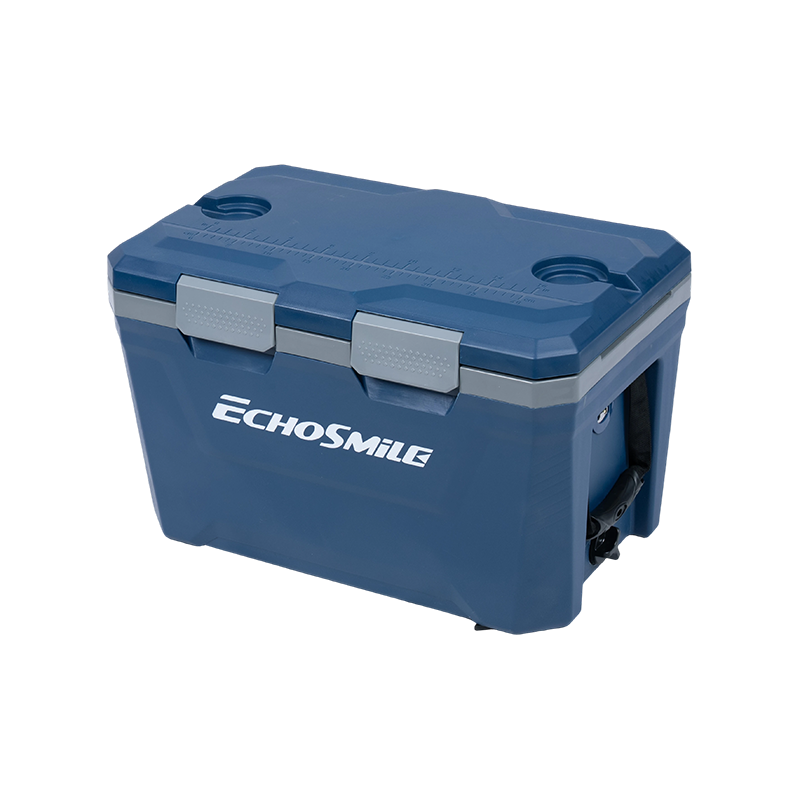 35-Quart Injection-Molded Portable Cooler with Optional AccessoriesThis lightweight 35-quart cooler uses injection molding and PU foam insulation, making it easy to carry for day trips. Optional water tap or backpack strap add flexibility, ideal for picnics, camping, and vehicle use.View Product →
A 35-quart injection-molded cooler, for example, fits a family day trip comfortably without dominating the trunk. The key is to verify the seal quality and wall thickness when comparing models, since two injection-molded boxes can differ by several hours of ice retention depending on whether the walls are hollow or foam-filled.
Weekend trips: one and a half to two days
Once the trip extends past 24 hours, ice retention becomes more demanding. A mid-size rotomolded cooler begins to justify its higher price at this level. With block ice, pre-chilling, and disciplined opening habits, a 50 to 75 quart rotomolded cooler can hold ice for three days in most conditions, giving you a comfortable safety margin for a two-day weekend. An injection-molded cooler can also manage this if it is packed perfectly and the weather cooperates, but the margin for error is much smaller.
Week-long expeditions: five to seven days
For a week in the backcountry, a large rotomolded cooler is the only reliable choice. The combination of a thick LLDPE shell, injected polyurethane foam, and a well-designed gasket produces the multi-day retention that guides and expedition groups rely on. Load it with block ice, keep it in the shade, and open it once or twice a day; under these conditions, models in the 75-to-140-quart range regularly hold ice for five to seven days at summer temperatures. This is the category where manufacturers are comfortable publishing ice retention claims measured in days rather than hours.
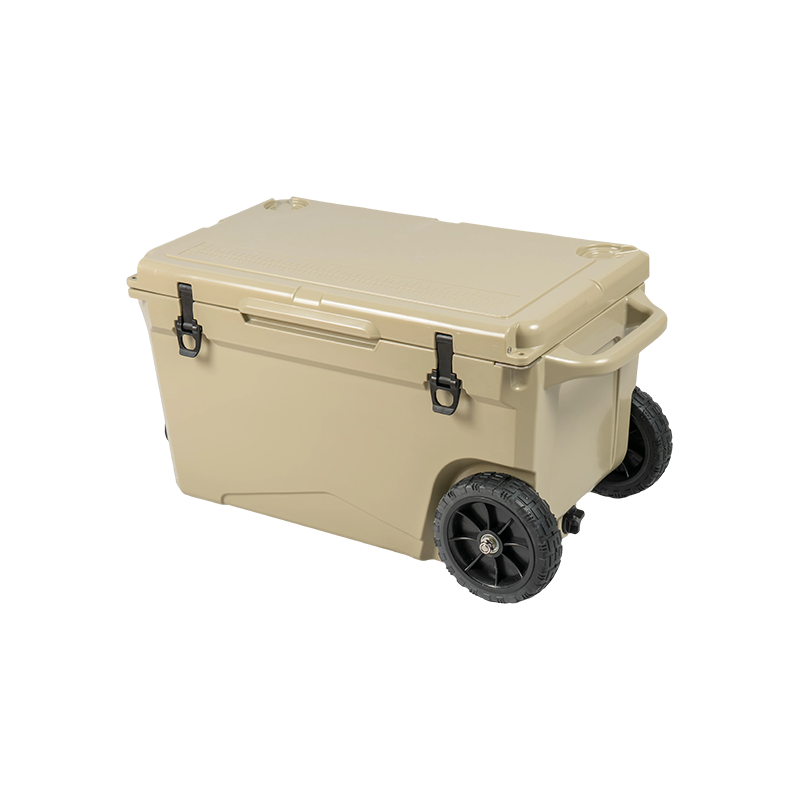 75-Quart Wheeled Rotomolded Cooler for Heavy-Duty Outdoor UseA large rotomolded cooler with wheels, PU foam insulation, and a 75-quart capacity. Designed for fishing, boating, and group events, its wheeled base eases transport of heavy loads from vehicle to campsite or dock.View Product →
A 75-quart rotomolded cooler with integrated handles and a molded-in fish ruler is a strong example of this class. It offers the thick walls and durable latches needed for repeated heavy use, and it transitions easily from the back of a pickup to the deck of a fishing boat.
On-water and saltwater use
Saltwater changes the durability calculation. Corrosion attacks metal hinges, latches, and drain parts, and constant UV exposure fades and weakens plastic surfaces. For marine fishing, choose a rotomolded cooler with UV-stabilized LLDPE shell, stainless or plastic hardware, and a molded-in ruler for measuring catch. Avoid steel hardware entirely. A cooler that spends its life on a boat needs the same impact resistance as a truck bed cooler but with thicker, UV-protected walls and seals that resist salt crystallization.
Commercial Seafood Transport and Cold-Chain Containers
Commercial seafood operations measure cooler lifespan in shifts and seasons, not weekend trips. A seafood processing facility fills insulated fish tubs with freshly caught fish and ice, stacks them in a refrigerated vehicle, and expects them to arrive at the market at safe temperatures. The tub itself must survive daily sanitation, forklift handling, stacking with heavy loads, and long exposure to salt water and UV.
Insulated fish tubs are built for this duty cycle. Their thick LLDPE walls resist impact, their reinforced rims support stacking, and their drain systems allow meltwater management during transport. The NL480L model from the Nelgreen range is representative of this category: it is designed specifically for seafood storage and transport, with food-grade LLDPE construction and dimensions that suit both fishing vessels and processing facilities.
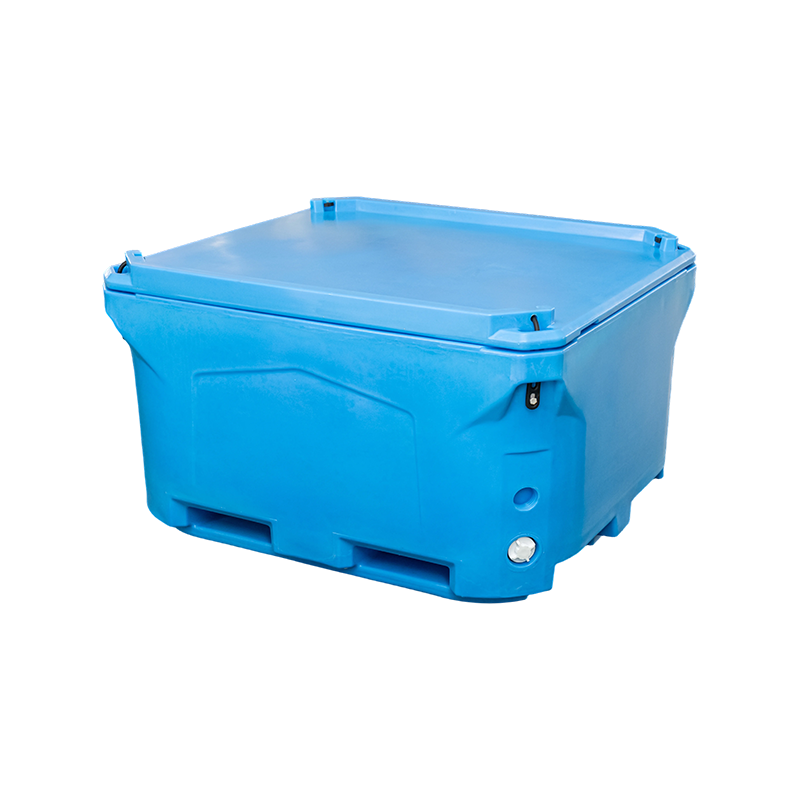 480-Liter Food-Grade Insulated Fish Tub for Seafood HandlingThis 480-liter fish tub features a long, shallow body for easier access during sorting and loading. Made from food-grade LLDPE with PU insulation, it suits processing lines, docks, and cold-chain transport, with optional casters.View Product →
For commercial buyers, the relevant question is not whether a fish tub keeps ice for a certain number of days, but whether it can maintain safe temperatures over a defined logistics route with the available ice, load size, and vehicle refrigeration. A properly sized tub with sufficient block ice will comfortably handle a 48-hour route in warm conditions; the same tub carrying a partial load and opened frequently will fail much earlier. Ice retention is a systems calculation, and the tub is only one component. Because food safety regulations are strict, commercial operators should verify material compliance, insulation thickness, and load capacity before purchasing, rather than relying on claims alone.
How to Test a Cooler Box Yourself
You do not need laboratory equipment to understand how a specific cooler performs. A simple home test produces useful data for comparing models and setting expectations. Start with an empty, clean cooler at room temperature. Weigh it so you can track meltwater. Fill it with a known quantity of ice, preferably block ice or large cubes, and record the time, the ambient temperature, and the position of the cooler. Every 12 hours, open the lid briefly, check the amount of remaining ice, and measure the internal air temperature with a probe thermometer if available. Continue until all ice has melted or the internal temperature rises above 4 degrees Celsius.
Repeat the test in the same ambient conditions for each cooler you are comparing. The differences will be visible within 48 hours. A styrofoam box may be nearly empty of ice by then, while a rotomolded cooler will still hold substantial ice. This test also reveals real-world seal quality: if you feel warm air escaping around the lid when it is closed, or if condensation forms heavily on the outside, the gasket is not sealing properly and performance will suffer accordingly.
For commercial tubs, the test should be scaled to realistic conditions: fill the tub with fish or water-filled containers to simulate product load, add the intended amount of ice, and measure temperature over the actual expected transport duration. Testing with a full load is important because an empty tub behaves differently from one filled with mass that holds cold.
Reading Product Claims Realistically
Manufacturers publish ice retention figures under specific conditions, and those conditions are rarely printed on the box. A claim of five days of ice retention usually assumes block ice, a pre-chilled box, a full load, an ambient temperature around 25 to 32 degrees Celsius, and very limited lid opening. With cubed ice, a partial load, direct sunlight, and a lid opened every few minutes, the same cooler may deliver only two days. This does not mean the claim is false; it means the conditions matter enormously.
When evaluating a cooler for purchase, ask what methodology supports the retention claim. A responsible supplier will describe its test conditions. A claim made without conditions should be viewed with skepticism. For OEM and private-label buyers, this point is especially important: the same cooler design can yield different retention numbers if the foam density, wall thickness, or gasket fit varies between production batches. Consistent quality control, including foam weight checks and seal inspection, is what makes published numbers trustworthy across thousands of shipped units.
It is also worth distinguishing between marketing terms and performance. "Insulated" means the box has some barrier to heat transfer; it says nothing about how strong that barrier is. "Rotomolded" describes a manufacturing process, not an automatic guarantee of quality; a poorly designed rotomolded cooler with thin foam and a leaking lid will underperform a well-designed injection-molded cooler. Buy from the specifications, not from the adjectives.
A Note for Brands, Importers, and Procurement Teams
If you are sourcing cooler boxes for a brand, a distribution network, or a commercial cold-chain operation, the lifespan question becomes a specification and quality control issue rather than a personal preference. Ice retention targets should be defined in advance: 24 hours for day-trip consumer models, 72 hours or more for expedition-grade rotomolded boxes, and 48-plus hours for seafood transport tubs operating in a refrigerated truck. Physical durability targets should include drop-test standards, UV exposure expectations, and hinge-cycle counts. These specifications are what separates a product from a commodity.
The manufacturing partner's capabilities determine whether those specifications can be met consistently. Nelgreen, as a specialist in rotomolded and injection-molded cooling products, offers OEM and ODM services covering everything from mold design to material selection and final assembly. For procurement teams evaluating a supplier, it is wise to request sample testing, inspect the mold and production line, and discuss how wall thickness, foam density, and gasket tolerances are controlled. These details have a direct effect on how long the finished cooler lasts, both in terms of ice retention and physical service life. If your team needs a partner who can engineer cooler boxes and insulated fish tubs around your target durations, you can talk to our engineering and sales team directly.
Final Thoughts
The question "how long does a cooler box last" has no single answer because no single product covers every need. A disposable Styrofoam box gives you a day, a soft cooler gives you a day and a half, an injection-molded hard cooler gives you a weekend, a rotomolded expedition cooler gives you a week, and an industrial fish tub gives you years of commercial service. The physical box itself follows the same hierarchy: cheaper materials fail sooner, while thick polyethylene and replaceable hardware translate directly into a longer useful life.
Start the decision process on the wrong end and you will be disappointed. Start it by asking how long you need the cold to last, how much ice you are willing to carry, how many years you expect to own the box, and what kind of abuse it will face. With those four answers, the right cooler box is not hard to find. And once you have it, a little pre-chilling, tight packing, and shade will make sure it lasts exactly as long as the trip requires.
Our R&D team has over 15 years of rich experience in the field of rotational molding products and has applied for 6 product patents. The number of factory employees has exceeded 100. Strict management and quality control have enabled us to take the leading position in the industry. In addition, the experienced sales team can provide customers with a variety of solutions and high-quality services.
Related products
-
-
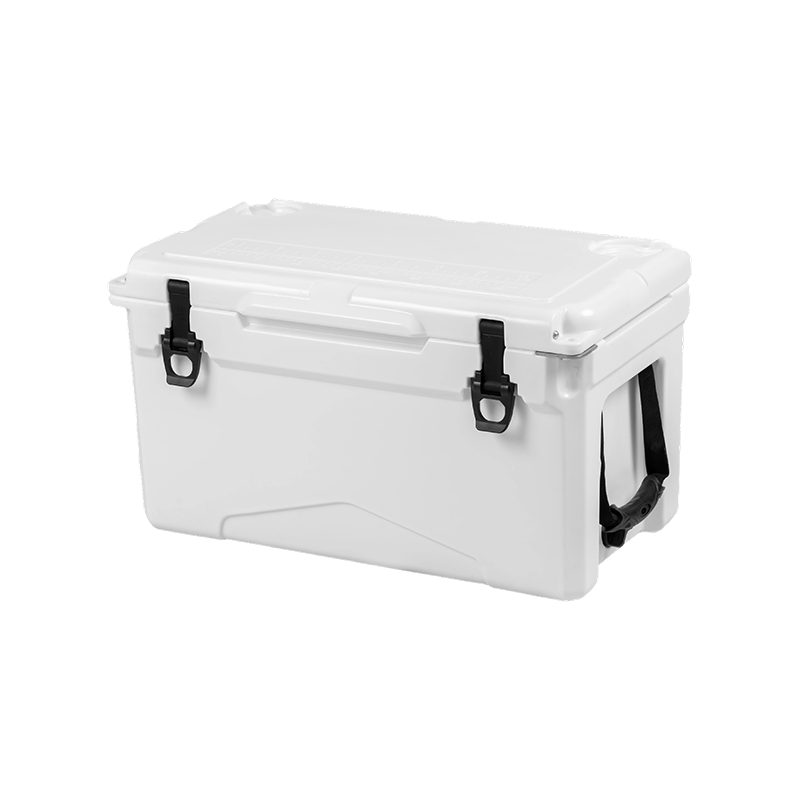
The 30QT NL-30 stands out for its elongated body, with an interior of about 46.2 × 23.6 × 26.1 cm. At this capacity, the extra usable length is particularly helpful for fish, long bottles and elongate...
See Details -
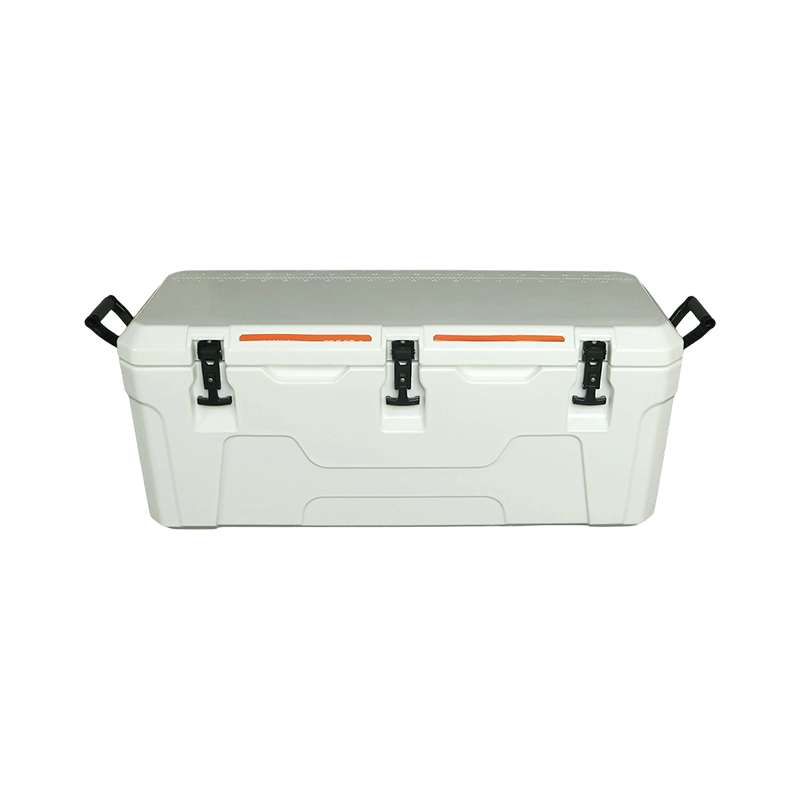
The 140QT NL-140 has an interior of about 105 × 32 × 38 cm, and its more-than-one-meter usable length is the key advantage of this model. It is better suited to larger fish, longer catch and supplies ...
See Details -

The 75QT NL-75 is a large wheeled model with an interior of about 66.2 × 34.1 × 35.8 cm. It is suited to offshore fishing, boating, family barbecues and group events where more ice, drinks, food or ca...
See Details -
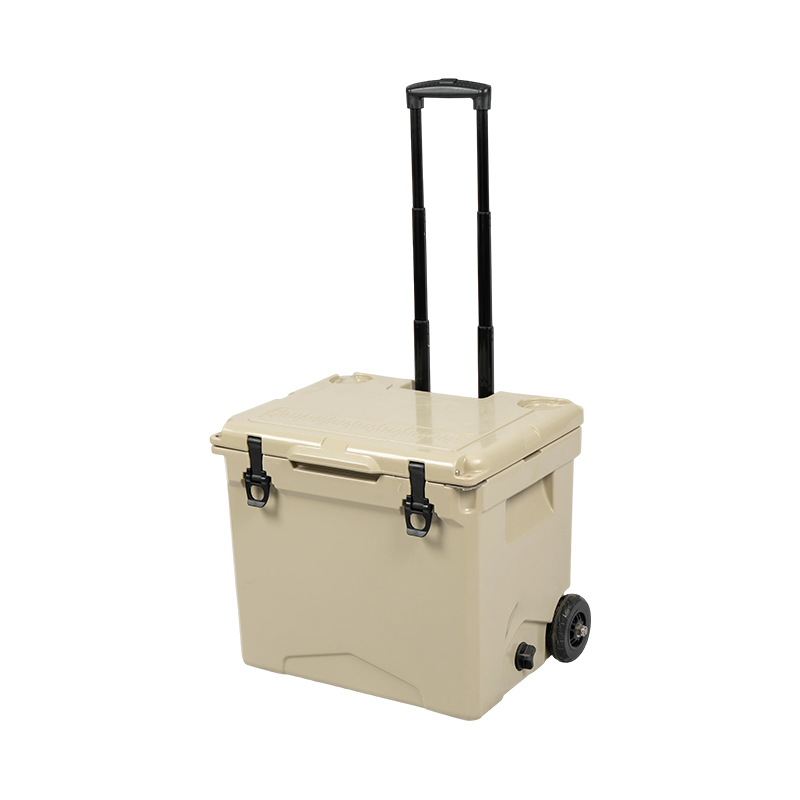
The 45QT NL-45 has a deeper interior of about 41.8 × 29.9 × 30.4 cm, making it useful when vertical storage matters. Taller food containers, bottled drinks and campsite supplies can be packed upright ...
See Details -
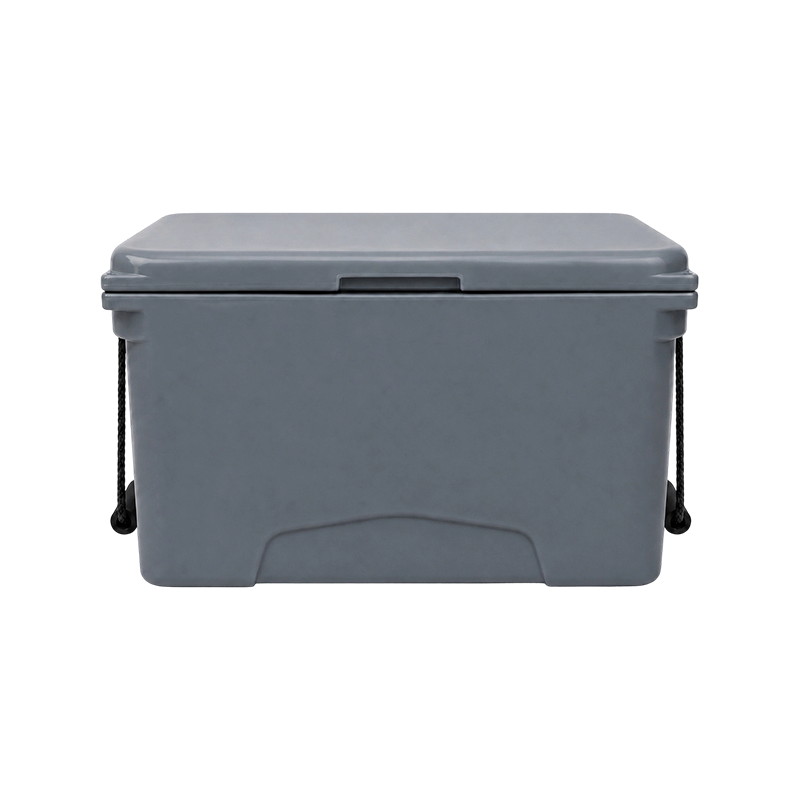
The 65QT NL-65 has an interior of about 60.5 × 33.5 × 32 cm, providing enough room for group weekend supplies or a larger catch while keeping proportions practical for vehicles and boats. The rotomold...
See Details
Related News
-
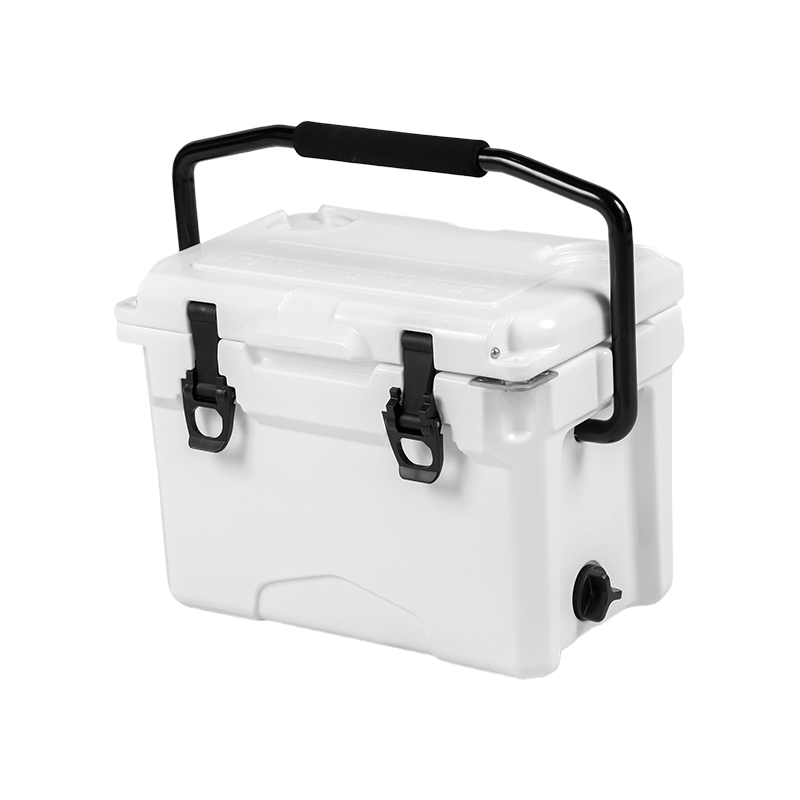
Why Choose a Rotomolded Cooler? Rotomolded Coolers: A Brief Introduction The Pinnacle of Portable Cooling Technology The modern era of outdoor recreation and de...
See Details -
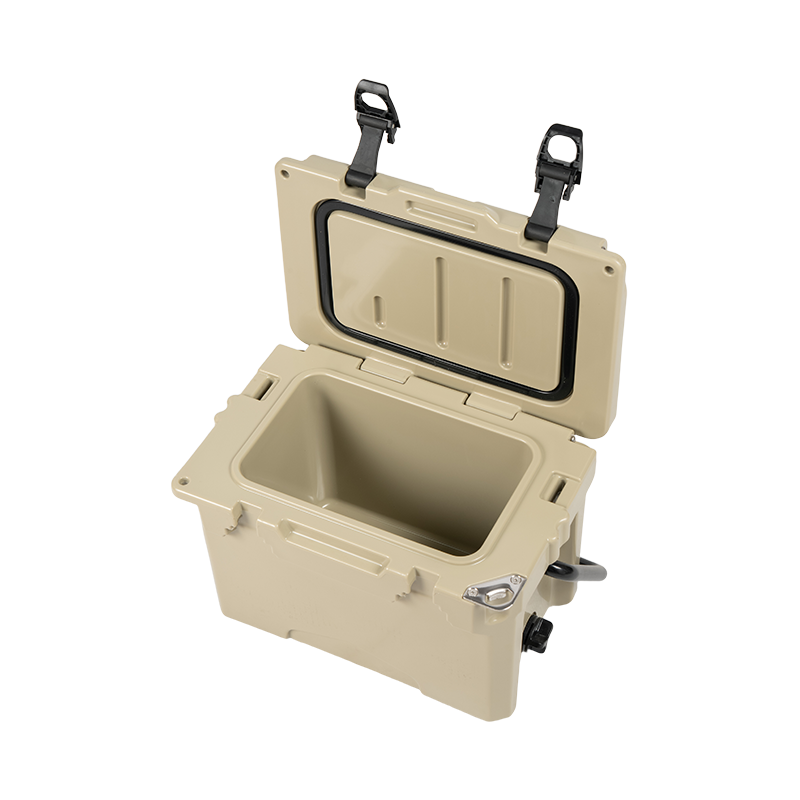
Introduction to Insulated Fish Tubs When you're out on the water, whether it's a deep-sea fishing trip or a relaxing day at the lake, the freshness of your catc...
See Details -
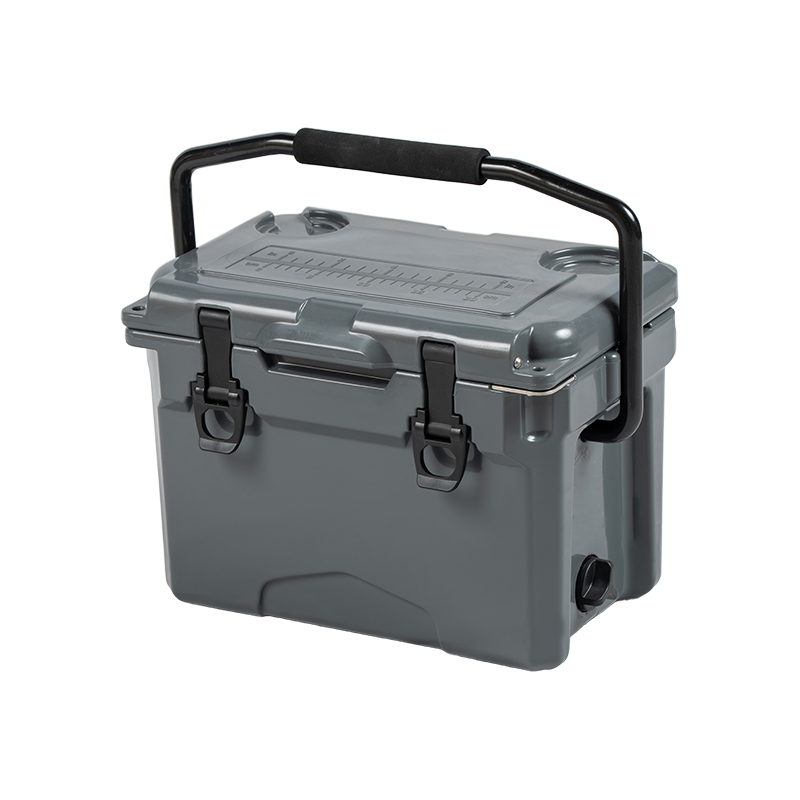
1. Insulation Quality in Outdoor Cooler Boxes When choosing an outdoor cooler box, one of the most critical factors to consider is insulation quality. The insul...
See Details -
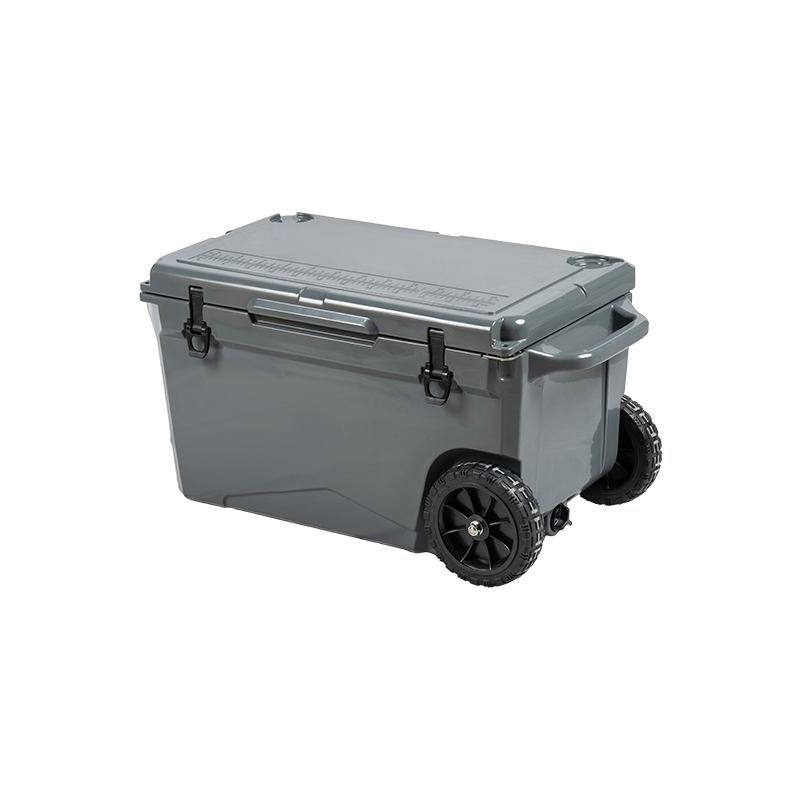
The Unmatched Advantage of ROTOMOLDING COOLER BOX Defining the Premium Standard: What exactly is a ROTOMOLDING COOLER BOX? The ROTOMOLDING COOLER BOX is not mer...
See Details
Be the First to Know
For exclusive deals and the latest offers, sign up by entering your email address below.


Contact Info
 No. 6, Guantong Road, South Zone, Xiaocaoe Town Industrial Park, Ningbo, Zhejiang, China
 +86 13736107260
  [email protected]
 Qr Code



Copyright © Ningbo Nelgreen Outdoor Products Co., Ltd. All Rights
Reserved
 OEM/ODM Seafood Insulated Boxes Manufacturers