 EN
EN
 English
  русский
  Español
  Deutsch
  عربى
عربى 
The 140QT NL-140 has an interior of about 105 × 32 × 38 cm, and its more-than-one-meter usable length is the key advantage of this model. It is better suited to larger fish, longer catch and supplies ...
See Details
How Long Does Dry Ice Last in a Cooler Box? A Complete Practical Guide
2026-08-20
If you pack a 5 lb (2.3 kg) block of dry ice in a standard cooler box today, expect it to last about 18 to 24 hours. Place the same block inside a well-insulated rotomolded cooler box and the window expands to 36 to 48 hours. Use a large 75 qt or 140 qt rotomolded unit, keep the lid closed, and put the box in the shade, and three to five days becomes realistic. At the other extreme, a thin-walled picnic cooler can burn through the same block in less than 12 hours.
That range looks frustratingly wide, but there is a clear reason for it. Dry ice never melts. It sublimates, which means it turns directly from solid carbon dioxide at -78.5°C (-109.3°F) into carbon dioxide gas. This process happens continuously from the moment you buy the block, and the only thing your cooler can do is slow it down. The rate at which sublimation happens is governed by heat moving from the outside world into the box. A cooler with thin walls, a loose lid, or large empty interior spaces lets heat in quickly, and the dry ice disappears quickly. A cooler with thick insulation, a tight gasket, and a dense load keeps heat out, and the dry ice lasts much longer.
This article gives you specific numbers for different types of cooler boxes, explains the factors that control how long dry ice lasts, compares dry ice honestly with regular ice, walks you through a packing sequence used by people who ship frozen seafood for a living, and covers the safety rules that prevent dry ice from becoming a hazard. Whether you are planning a camping trip, a boat run, or a commercial cold-chain trial, the guidance below applies to all three.
What Is Dry Ice and Why Does It Sublimate So Quickly?
Dry ice is the solid form of carbon dioxide, produced by cooling and pressurizing CO2 gas and then venting the pressure to form a dense, snow-like material that is compressed into blocks, slabs, or pellets. At normal atmospheric pressure, dry ice cannot exist as a liquid. When it absorbs heat, it passes directly from solid to gas in a process called sublimation. That phase change absorbs a substantial amount of energy, about 571 kJ per kilogram, compared with about 334 kJ per kilogram for melting water ice. In simple terms, a kilogram of dry ice carries roughly 70 percent more cooling energy than a kilogram of ordinary ice, and it releases that energy at a far lower temperature.
The surface temperature of dry ice is -78.5°C (-109.3°F), far colder than any freezer you are likely to use. This extremely low temperature changes the way a Camping Cooler Box behaves. A standard ice-and-water mix holds the box near 0°C (32°F), which keeps drinks cold and fresh food cool. Dry ice keeps the interior below freezing, which keeps meat, fish, and prepared meals frozen for days. That distinction matters: if your goal is to keep food frozen, dry ice is the only practical option for a portable cooler. If your goal is simply cold drinks, regular ice is cheaper and easier.
One physical property of dry ice deserves special attention. Carbon dioxide gas is about 1.5 times as dense as air, so it sinks and settles in low spaces. Inside the cooler, that is helpful: the heavy gas flows down around the food and creates a cold, stable blanket. Outside the cooler, it can be dangerous. If a dry ice cooler sits in a closed car, tent, or small room, the escaping CO2 can accumulate near the floor and displace the oxygen people need. We will return to this in the safety section, but keep it in mind from the start.
The important point for this section is that dry ice does not have a switch that can be turned off. It sublimates at a rate set by the heat arriving from outside. Your only levers are the insulation of the cooler, the amount of dry ice you buy, the way you pack the box, and the number of times you open it. Every hour of extra life you want has to come from one of those levers.
The Direct Answer: How Long Does Dry Ice Last in a Cooler Box?
Now for the number you came for. Under typical summer conditions, with an outside temperature near 25°C (77°F), a 5 lb block of dry ice, and a lid opened no more than three or four times a day, a standard injection-molded cooler box holds dry ice for about 14 to 24 hours. A rotomolded cooler box with thick insulated walls extends that to 24 to 48 hours. Large, high-capacity rotomolded boxes in the 75 qt to 140 qt range, opened rarely, can keep dry ice for three to five days. For reference, a common consumer dry ice block weighs 5 lb and is roughly the size of a thin hardcover book. The table below summarizes these figures.
| Cooler box category | Typical wall thickness | Typical dry ice life | Best case |
|---|---|---|---|
| Soft-sided bag or thin picnic cooler | Under 25 mm (1 in) | 8 to 14 hours | 18 hours |
| Standard injection-molded cooler | 25 to 38 mm (1 to 1.5 in) | 14 to 24 hours | 28 hours |
| Medium rotomolded cooler | 38 to 50 mm (1.5 to 2 in) | 24 to 48 hours | 60 hours |
| Large rotomolded or commercial cooler | 50 to 75 mm (2 to 3 in) | 3 to 5 days | 7 days |
Notice that the table assumes a 5 lb block. If you double the block to 10 lb, you should not expect double the time. Dry ice sublimates from its surface, and surface area grows more slowly than mass. In the same cooler and the same conditions, a 10 lb block typically lasts about 70 to 90 percent longer than a 5 lb block. A 20 lb slab, placed flat on a barrier layer in a large cooler, can keep the interior below freezing for four to seven days, provided the box is opened only once or twice a day.
Here is a quick planning rule of thumb. For every 10 qt of cooler capacity, budget roughly 1.5 to 2 lb of dry ice per day of frozen storage. A 50 qt cooler for a two-day trip needs about 10 lb; a 100 qt cooler for a four-day trip needs about 20 to 25 lb. Real conditions vary, so add a 20 percent margin rather than running the block down to nothing before you reach your destination.
One more point surprises many first-time users. The ice-retention ratings printed on cooler boxes are almost always based on regular ice, meaning the interior of the cooler sits near 0°C. With dry ice, the interior sits near -78.5°C, so the temperature difference between the inside and the warm outside is about four times larger. Physics then does what physics does: heat flows through the walls much faster, and the dry ice must work harder to hold the interior temperature. A cooler rated for five days of regular ice may therefore hold dry ice for only two or three days. That does not mean the cooler is defective. It means dry ice demands a higher level of insulation, which is exactly why thicker-walled rotomolded boxes outperform everything else in this test.
What does this mean for your plan? If you want to keep food frozen for a weekend, a medium-size rotomolded box with a 10 lb block gives you comfortable margin. For a two-day drive to a campsite with a cooler full of groceries, a standard box will need a refill or replacement block along the way, while a 75 qt rotomolded box with a 15 lb block can realistically arrive with meat still frozen. If you only have a cheap picnic cooler, count its useful life in hours, not days, and plan meals that will survive an early thaw.
Six Factors That Control How Long Dry Ice Lasts
Once you understand that dry ice sublimation is a heat problem, the factors that control its life become obvious. These are the six that matter most in real use.
Factor 1: Cooler Insulation and Wall Thickness
A cooler box is a heat barrier. The thicker the barrier, the slower heat reaches the dry ice. Soft-sided bags and cheap picnic boxes leak heat from every surface. A standard injection-molded cooler is better, with walls usually in the 25 to 38 mm range. Rotomolded coolers take insulation seriously: the rotational molding process lays down a thick, uniform layer of food-grade polyethylene with no thin spots at the corners. This is why almost every serious dry ice user ends up buying a rotomolded box. Cold air is dense and escapes through gaps, so a continuous gasket and a latch that pulls the lid down across the entire rim matter as much as the walls themselves. When you examine a cooler, test the lid compression before you check anything else.
Factor 2: Amount of Dry Ice and Block Form
The total mass of dry ice determines the total cooling energy available, but the form decides how fast that energy is released. Pellets have an enormous surface area per kilogram, so they sublimate quickly. In identical conditions, pellets can disappear roughly twice as fast as a solid block. For trips longer than a single day, buy blocks or slabs rather than pellets. A single flat slab resting on a cardboard barrier gives the longest life for its weight because it exposes the least surface area. For planning, expect to use about 5 lb for a weekend, 10 to 15 lb for three or four days, and 20 lb or more for a full expedition week.
Factor 3: Outside Temperature, Sun, and Placement
Dry ice is not immune to the environment. In direct sunlight at 32°C (90°F), the block sublimates much faster than in the shade at 20°C (68°F). A cooler parked in a closed car on a hot day can see cabin temperatures above 50°C (122°F), and dry ice life can be cut in half. Even the most expensive cooler cannot compensate for being left in direct sun. Put the cooler in the shade, lift it off hot asphalt with a board or rack so air can circulate underneath, and drape a reflective cloth over the top. These simple measures routinely add several hours to the life of a block. Humidity plays a smaller role, but humid air carries more heat into the box when the lid opens, so coastal and tropical conditions deserve a little extra margin.
Factor 4: Lid Openings
Every time the lid opens, cold gas spills out and warm, humid air rushes in. The effect is cumulative. A cooler opened ten times during a day will lose its dry ice noticeably faster than one opened twice. Organize the packing so the items you need are predictable: put drinks in a separate regular-ice cooler, and reserve the dry ice box for frozen food that only needs to be fetched once or twice a day. Make every opening count by doing all retrieval in one pass and closing the lid within seconds. If you have ever stood in front of an open freezer deciding what to cook, you already know the habit that kills dry ice life.
Factor 5: Empty Space Inside the Cooler
Air is a heat buffer, and every liter of empty space in a cooler box is air that must be cooled again after each opening. A partially full cooler with a 5 lb block will lose dry ice faster than the same cooler packed to the brim. Fill the volume with frozen food, bags of regular ice for a separate zone, or even clean cardboard and foam blocks if you are only running a small load. The goal is to leave as little air movement as possible inside the box. This factor is easy to overlook because it has nothing to do with the cooler itself, but it can change the result by several hours.
Factor 6: Pre-Chilling
A cooler that starts the day at 30°C (86°F) will spend its first hours of dry ice life simply removing heat from its own walls. If the interior of the box is already near 0°C before the dry ice goes in, the block can start doing useful work immediately. Put a few bags of regular ice inside the night before, or keep the cooler in an air-conditioned space. This is one of the cheapest and most effective habits you can adopt, and it costs nothing except a little planning. Boats and commercial vehicles that keep their coolers indoors overnight get this benefit automatically.
Dry Ice vs Regular Ice in a Cooler Box
If you are deciding between dry ice and ordinary ice, stop thinking in terms of which is better. They are different tools for different jobs, and experienced users often run both in the same cooler box at the same time. The table below lays out the practical differences.
| Criterion | Dry ice | Regular ice |
|---|---|---|
| Temperature at use | -78.5°C (-109.3°F) | 0°C (32°F) |
| Main effect | Keeps food frozen | Keeps food and drinks cold |
| By-product | Carbon dioxide gas | Water |
| Mess | None, stays dry | Meltwater, soaked labels |
| Typical life in a rotomolded cooler | 24 to 48 hours | 2 to 5 days |
| Cooling energy per kg | About 571 kJ | About 334 kJ |
| Safety requirements | Gloves, ventilation, no airtight sealing | Minimal |
The pattern is clear. Regular ice is a materials-handling product: cheap, available at almost every gas station, easy to handle, and perfectly suited for anything that should stay between 0°C and 7°C. Dry ice is a precision freezing product: expensive, cold enough to burn skin, but capable of holding a box below freezing for days without generating a drop of water. If you are transporting frozen seafood, keeping meat for a hunting camp, or running a small food business out of a cooler, there is no substitute.
Choose dry ice when the priority is frozen storage: fish fillets on a multi-day boat trip, hamburger patties for a weekend camp, ice cream inventory for a vending event, or prepared meals for a charter boat. Dry ice also wins when meltwater is dangerous to your gear, when space is tight, or when you want to eliminate the whole draining chore. Choose regular ice for a day trip or overnight outing where cold drinks and fresh vegetables matter more than freezing. Regular ice is gentler on fresh produce, cheaper, and far more forgiving when people rummage through the box all day.
For multi-day trips, the most reliable layout is one dry ice cooler for frozen food and a separate cooler for drinks. If you must use a single box, create zones with a vertical cardboard divider: dry ice on one side, regular ice on the other, and frozen items nearest the dry ice. Keep a barrier between the dry ice and anything you do not want frozen solid. Do not pour meltwater from the regular ice side into the dry ice side, and never place the two ice types directly against the same food item.
Cost is a real consideration. Dry ice typically costs three to five times more per kilogram than bagged ice, and it keeps evaporating while regular ice waits in your freezer. That premium is worth paying when the alternative is spoiled food, but not when a simple bag of cubes will do the job. For commercial users, the economics favor dry ice whenever the load must arrive at a destination below freezing. Seafood distributors and beverage suppliers routinely load block dry ice into large insulated fish tubs and commercial rotomolded boxes because the cost of spoiled product is far higher than the cost of the dry ice itself.
Why Cooler Design Matters More Than Any Other Variable
If you have to choose one thing to get right, choose the cooler itself. Packing habits and careful handling can add hours to the life of a dry ice block, but a poorly insulated box will defeat all of them. The design details below separate coolers that handle dry ice well from coolers that merely tolerate it.
Wall thickness is the first specification to compare. Rotomolded coolers are made by placing polyethylene powder inside a closed mold that rotates and bakes until the powder melts and coats every surface evenly. The result is a one-piece shell with thick walls, including at the corners where injection-molded boxes tend to be thinnest. Because the shell is a single layer with no seams, there are no weak paths for heat to follow. Our guide on rotomolded cooler durability and thermal performance explains the production process and how it changes real-world ice retention. The honest tradeoff is weight, price, and convenience: injection-molded coolers are lighter, cheaper, and easier to carry, which is why they dominate the picnic market. Nothing in this article says a standard cooler cannot be used with dry ice; it simply means you should expect the shorter end of the range and plan the trip accordingly.
Wall thickness matters, but a cooler is only as good as its weakest seal. Cold air is heavier than warm air, so it flows downward and out through any gap. A continuous rubber gasket around the inside of the lid, paired with latches that pull the lid firmly against the gasket, prevents the micro-cracks that quietly drain performance. When you test a cooler, listen for a soft seal when the lid closes and check that the hinges do not leave an opening. A rotomolded box with a poor gasket will lose to a thinner cooler with an excellent seal, so never judge a cooler by its brand name or its price alone.
This is where a purpose-built box pulls ahead. A 60-quart outdoor rotomolding cooler box, for example, is a common choice for a family or small crew because its gasketed lid and thick shell hold a block of dry ice well past the typical one-day picnic limit. A cooler in this class is heavy, but the weight is exactly what provides the thermal mass and insulation that dry ice demands.
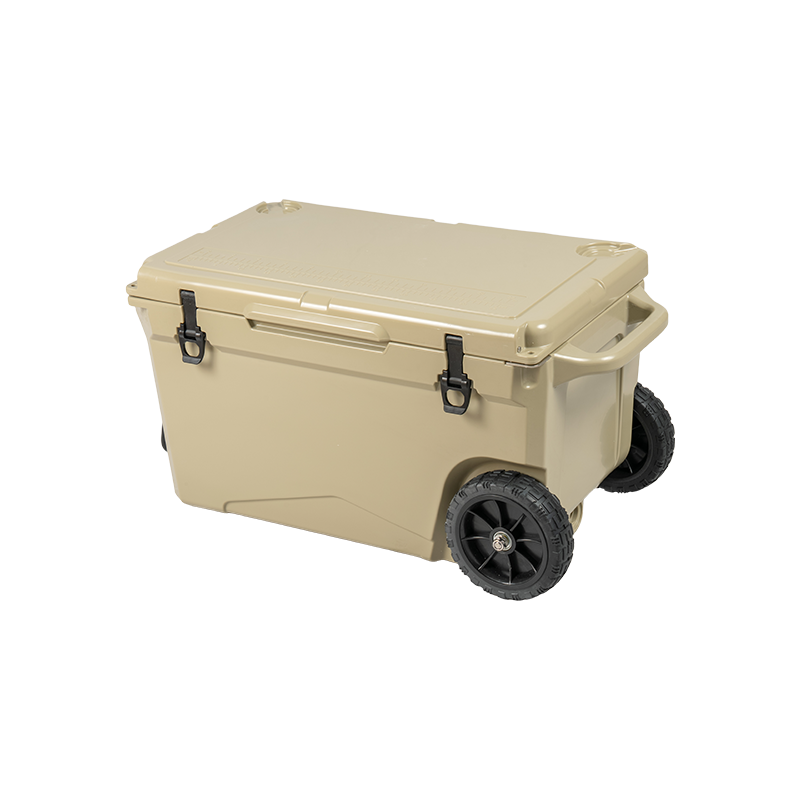 OEM/ODM 60QT Outdoor Rotomolding Cooler Box Suppliers, FactoryNingbo Nelgreen Outdoor Products Co., Ltd is top China OEM/ODM 60QT Outdoor Rotomolding Cooler Box suppliers and factory. 60QT Outdoor Ro...View Product →
Also pay attention to the drain plug. With dry ice, there is no meltwater, so the drain hole exists only as a potential entry point for heat. A well-designed plug should seat tightly enough to feel nearly flush with the floor of the cooler. And because dry ice will sit near or against the interior surface, the material should be food-grade, cold-resistant polyethylene. Thin, brittle plastics can become more fragile at very low temperatures, which is another reason rotomolded construction, with its thick uniform walls, is the safer choice.
How to Pack Dry Ice in a Cooler Box, Step by Step
The sequence below is used by commercial handlers who cannot afford wasted dry ice or spoiled inventory. It takes about five minutes and avoids most of the common mistakes.
- Pre-chill the cooler at least two hours ahead of packing. Bags of regular ice, freezer packs, or an air-conditioned room all work. Wipe the interior dry before you start.
- Lay a flat sheet of cardboard, closed-cell foam, or a thin cutting board on the floor of the cooler. This barrier stops the dry ice from touching the bottom wall directly and prevents rapid heat transfer at that contact point.
- Place the dry ice block or slab on the barrier. If you have more than one block, leave a small gap between them so the carbon dioxide gas can flow around the whole load.
- Add the frozen items. Keep a second cardboard layer between the dry ice and the food if the food will sit immediately on top. Anything that should stay frozen can go near the block; anything that should merely stay cold must go farther away.
- Fill every remaining liter of space with frozen goods or clean filler. Less air inside means the box stays colder for longer.
- Close the lid, latch it, and mark the outside of the cooler so family or teammates know not to open it casually.
- Group your retrieval: remove everything needed for the next meal in one quick pass, close the lid, and only then sort the load. Every second the lid stays open costs sublimation time.
- Position the cooler in the shade, raise it off hot ground, and cover it with a light-colored towel or reflective sheet. Re-cover the box immediately after access.
Following this sequence with a 10 lb block in a 60 qt rotomolded box typically yields a full 48 hours of below-freezing interior temperature in normal summer use. The same block in a thin picnic cooler with the same care may not survive a full day, which brings the choice of cooler back to the center of the decision.
Dry Ice Safety Rules You Cannot Ignore
Dry ice is not dangerous on its own, but three properties demand respect: extreme cold, carbon dioxide gas, and pressure buildup. The rules below cover the situations where accidents actually happen.
- Never touch dry ice with bare skin. Even a split-second contact can cause a cold burn because -78.5°C is cold enough to freeze the moisture on your skin instantly. Use thick insulated gloves or a towel whenever you handle the block.
- Never eat or swallow dry ice. Retail dry ice is not food, and internal contact can cause severe tissue damage.
- Keep dry ice away from children and pets. A curious child reaching for a smoking block is an emergency waiting to happen.
- Always ventilate the area. CO2 gas is heavier than air and collects in low, enclosed spaces. Transport the cooler in the trunk or with a window cracked, and never sleep in a car, tent, or small room with a dry ice cooler.
- Do not seal the cooler completely. Most coolers vent through small gaps, and a fully airtight box can bulge or crack as gas pressure builds. If your cooler has an unusually tight seal, open the lid briefly every few hours, outdoors, to release pressure.
- Use food-grade dry ice when it will share space with food, and maintain a cardboard or cloth barrier between dry ice and edible items, especially anything that will be eaten without cooking.
- Watch for signs of CO2 exposure: headache, dizziness, rapid breathing, or confusion. If anyone near a dry ice cooler feels these symptoms, move them to fresh air immediately and get medical help if symptoms continue.
- Never place dry ice in a sealed glass jar, bottle, or fully rigid container. Pressure from sublimation can rupture the container and send sharp fragments flying.
A 5 lb block produces roughly 1.2 cubic meters of carbon dioxide gas as it sublimates. Some of that stays inside the cooler and some vents around the lid. In a normal room this is harmless, but in a small sealed space it can lower oxygen levels meaningfully. This is the single most common dry ice mistake, so take it seriously, especially during car trips. If you finish a trip with leftover dry ice, let it sublimate outdoors in a ventilated, child-free area rather than trying to store it in a freezer, which will simply cause it to disappear faster while releasing gas into your kitchen.
How to Choose a Cooler Box for Dry Ice Use
If dry ice will be a regular part of your routine, buy a cooler that is designed for the job. The checklist below is useful whether you are a consumer buying one box for a fishing trip or an importer sourcing a container of coolers for a brand.
- Rotomolded construction for thick, uniform walls
- A continuous gasket and latches that create real compression
- Food-grade, cold-resistant polyethylene interior
- A drain plug that seals tightly, or no drain hole at all
- A flat, stable lid that can double as a seat or cutting surface
- Wheels for any box above 75 qt, because a heavy load gets much heavier with thick insulation
Capacity should match your longest trip, not your most common one. A 35 to 45 qt box is enough for two people on a weekend camping trip. A 60 to 75 qt box is right for a family of four over three or four days. A 75 to 140 qt box suits a fishing charter, a hunting camp, or a base station that will only be opened once a day. For commercial seafood transport, insulated fish tubs in the 100 to 800 liter range are the standard product, and they handle dry ice extremely well because their wall thickness is designed for industrial cold chains.
Two boxes that appear again and again in dry ice applications are the 75-quart large-capacity outdoor fishing rotomolding cooler box, which gives a fishing crew enough room for both block dry ice and a full day's catch, and the 140-quart outdoor portable insulated rotomolding cooler box, a practical choice when the cooler will stay closed for days and needs to hold a large volume of frozen food or commercial loads. Both are sized for the packing sequence described above, with enough interior volume to support the 1.5 to 2 lb per 10 qt per day planning rule.
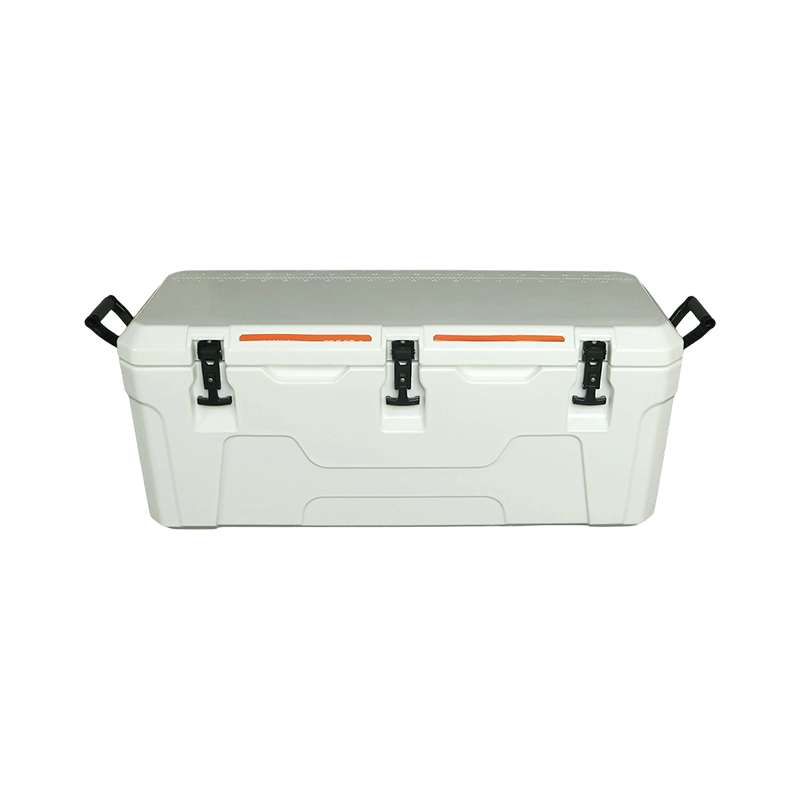 OEM/ODM 140QT Outdoor Portable Insulated Rotomolding Cooler Box Suppliers, FactoNingbo Nelgreen Outdoor Products Co., Ltd is top China OEM/ODM 140QT Outdoor Portable Insulated Rotomolding Cooler Box suppliers and fact...View Product →
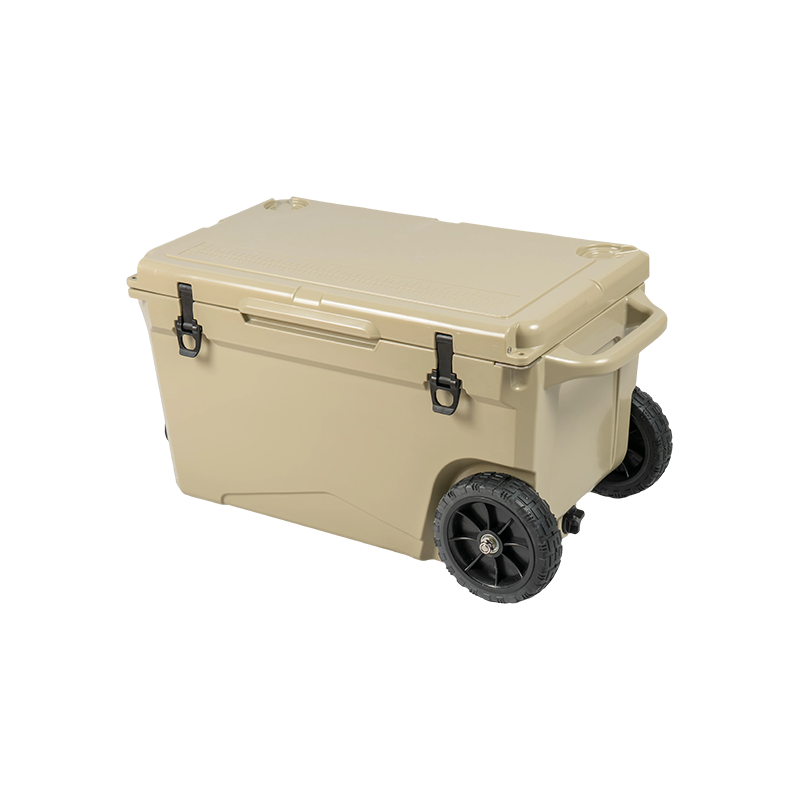 OEM/ODM 75QT Large Capacity Outdoor Fishing Rotomolding Cooler Box Suppliers, FaNingbo Nelgreen Outdoor Products Co., Ltd is top China OEM/ODM 75QT Large Capacity Outdoor Fishing Rotomolding Cooler Box suppliers and f...View Product →
There is also a purchasing risk to understand. Some lower-priced coolers claim ice-retention performance they cannot deliver, and the gap usually shows up in gasket compression and wall thickness. When sourcing for a brand, ask for those specifications in writing. For private-label and OEM sourcing, dry ice performance should be part of the product requirement before tooling is cut, not a surprise discovered in the first sample shipment. Wall thickness, gasket compression, and material grade are all decisions made at the mold stage. A manufacturer with in-house mold and tooling facilities can tune those parameters to the retention times a brand wants to promise, which is exactly why importer and distributor buyers should raise the dry ice question early in the conversation.
The Bottom Line: How Long Does Dry Ice Last in a Cooler Box?
Count on 18 to 24 hours in a standard injection-molded cooler, 24 to 48 hours in a well-insulated rotomolded cooler, and three to five days in a large, thick-walled box that stays closed. Those numbers are realistic across normal summer conditions with a 5 lb block. Adjust upward for larger blocks and colder weather, downward for pellets, direct sun, frequent openings, and empty space.
The single most important conclusion is that the cooler box is the variable you control most easily. A good rotomolded cooler with a tight gasket, a block of dry ice instead of pellets, a full load, and a shaded position will outperform a thin cheap cooler with double the dry ice. Start with the box, then optimize everything else.
Three mistakes shorten dry ice life more than anything else: using pellets instead of a block, leaving a partially filled cooler, and opening the lid frequently just to check. Eliminate those three and the same block of dry ice will last noticeably longer without costing you an extra cent. Before your next trip, test your own setup: buy a 5 lb block, pack it with the sequence above, and measure how long it lasts. That 30-minute test will tell you more than any online chart, because it accounts for your exact box, your climate, and your habits. For a wider view of what is available, you can review the full range of rotomolded cooler boxes and insulated fish tubs at the Nelgreen website, including the manufacturing details that determine dry ice performance.
Our R&D team has over 15 years of rich experience in the field of rotational molding products and has applied for 6 product patents. The number of factory employees has exceeded 100. Strict management and quality control have enabled us to take the leading position in the industry. In addition, the experienced sales team can provide customers with a variety of solutions and high-quality services.
Related products
-

-

The 75QT NL-75 is a large wheeled model with an interior of about 66.2 × 34.1 × 35.8 cm. It is suited to offshore fishing, boating, family barbecues and group events where more ice, drinks, food or ca...
See Details -
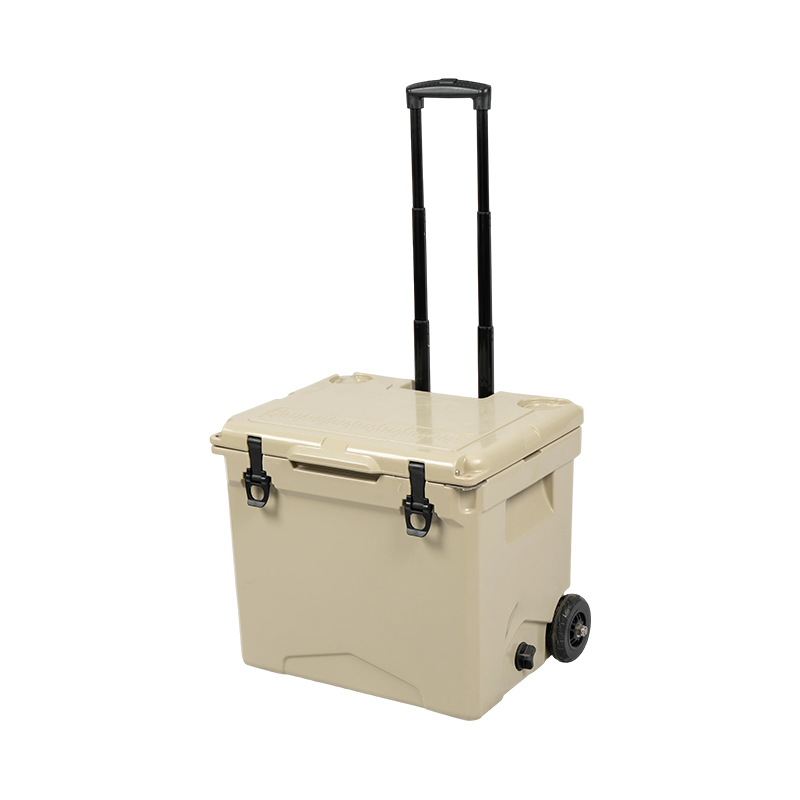
The 45QT NL-45 has a deeper interior of about 41.8 × 29.9 × 30.4 cm, making it useful when vertical storage matters. Taller food containers, bottled drinks and campsite supplies can be packed upright ...
See Details -
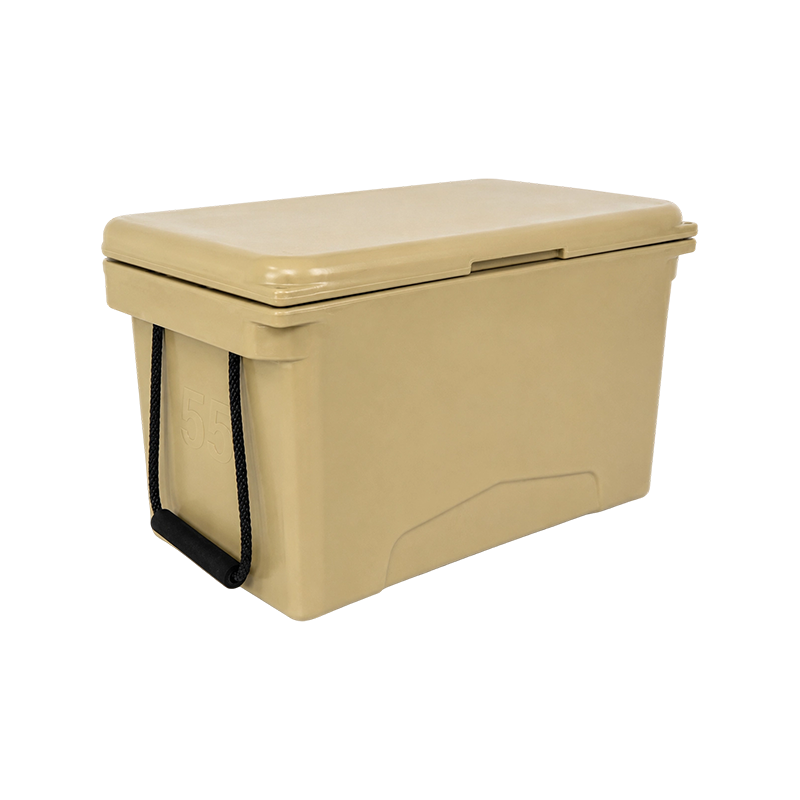
The 55QT NL-55 has a balanced interior of about 55 × 31 × 32 cm, which makes it a versatile model. It works for weekend camping, group drinks, fishing and vehicle storage, offering more room than a 40...
See Details -
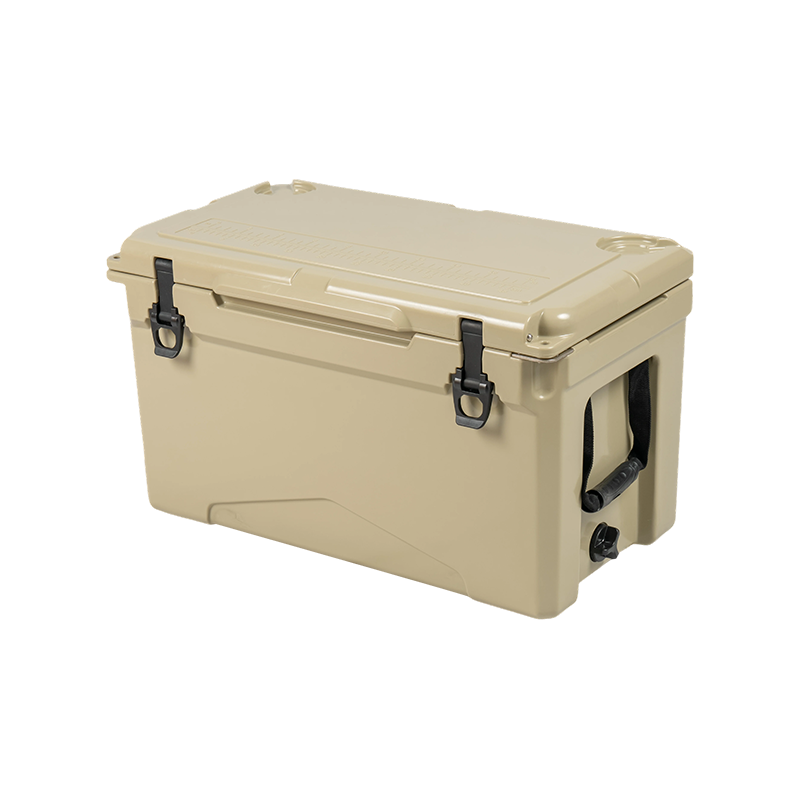
The 40QT NL-40 has an interior of about 51.8 × 26.3 × 29.9 cm and is well sized for weekend camping and family outdoor use for roughly 2–4 people. It carries more food and drinks than a personal 30QT-...
See Details -
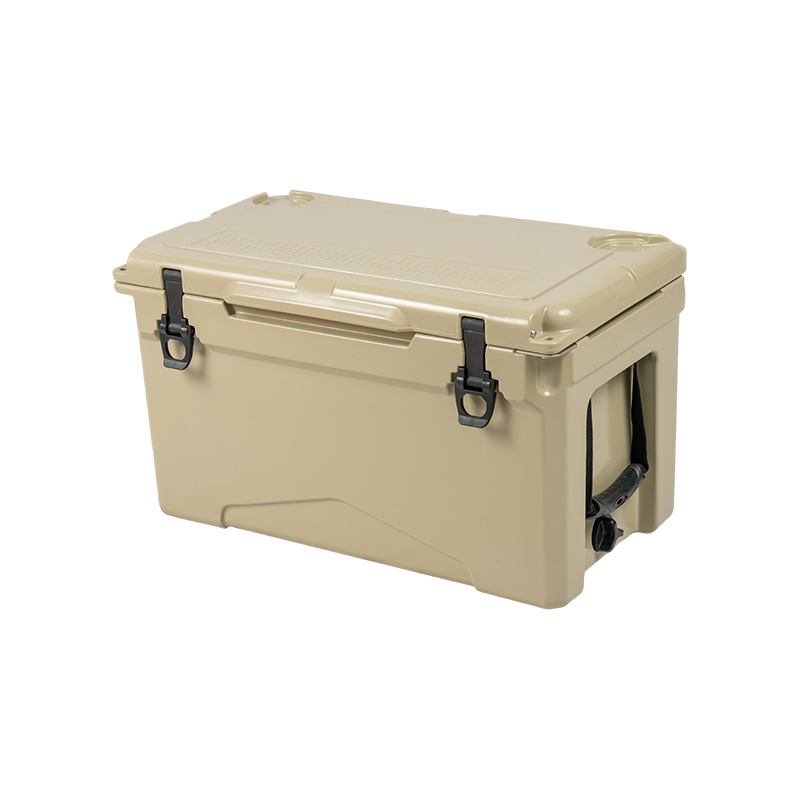
This 35QT model combines a one-piece rotomolded body with PU foam insulation for buyers who want a tougher cooler with additional outdoor features. It measures approximately 62 × 35.5 × 37.5 cm extern...
See Details
Related News
-
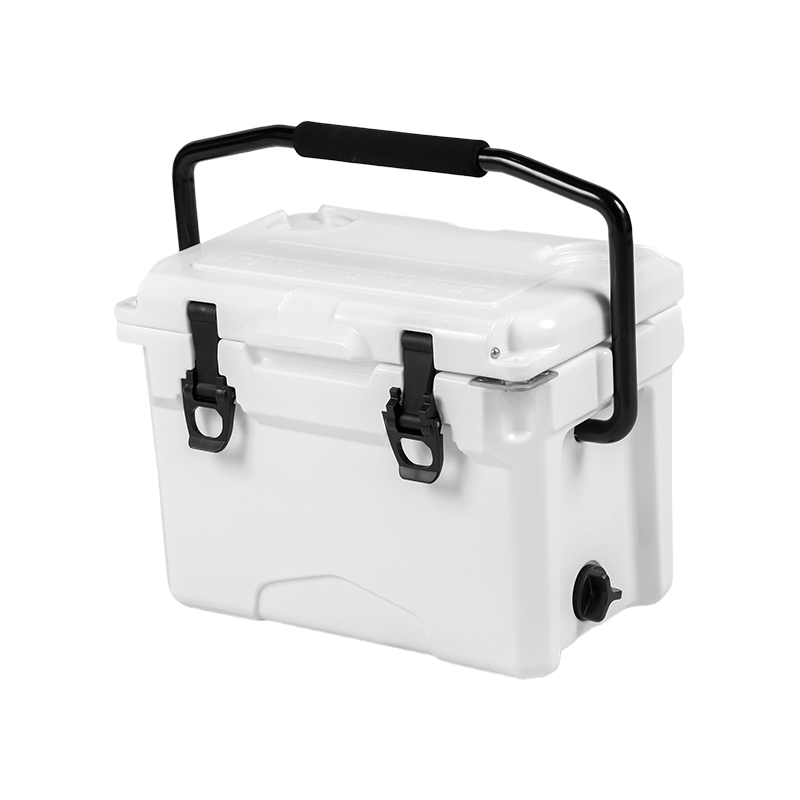
Why Choose a Rotomolded Cooler? Rotomolded Coolers: A Brief Introduction The Pinnacle of Portable Cooling Technology The modern era of outdoor recreation and de...
See Details -
Introduction to Insulated Fish Tubs When you're out on the water, whether it's a deep-sea fishing trip or a relaxing day at the lake, the freshness of your catc...
See Details -
1. Insulation Quality in Outdoor Cooler Boxes When choosing an outdoor cooler box, one of the most critical factors to consider is insulation quality. The insul...
See Details -
The Unmatched Advantage of ROTOMOLDING COOLER BOX Defining the Premium Standard: What exactly is a ROTOMOLDING COOLER BOX? The ROTOMOLDING COOLER BOX is not mer...
See Details
Be the First to Know
For exclusive deals and the latest offers, sign up by entering your email address below.


Contact Info
 No. 6, Guantong Road, South Zone, Xiaocaoe Town Industrial Park, Ningbo, Zhejiang, China
 +86 13736107260
  [email protected]
 Qr Code



Copyright © Ningbo Nelgreen Outdoor Products Co., Ltd. All Rights
Reserved
 OEM/ODM Seafood Insulated Boxes Manufacturers